Springboard vs Platform Diving: What’s the Difference?
If you’ve spent very much time around pools, you’ve probably seen people diving at one point in time or another. Diving is usually done from either a springboard or a platform. While there’s some overlap between the two types of diving, there are also some nuances that make each type unique.
The Structure
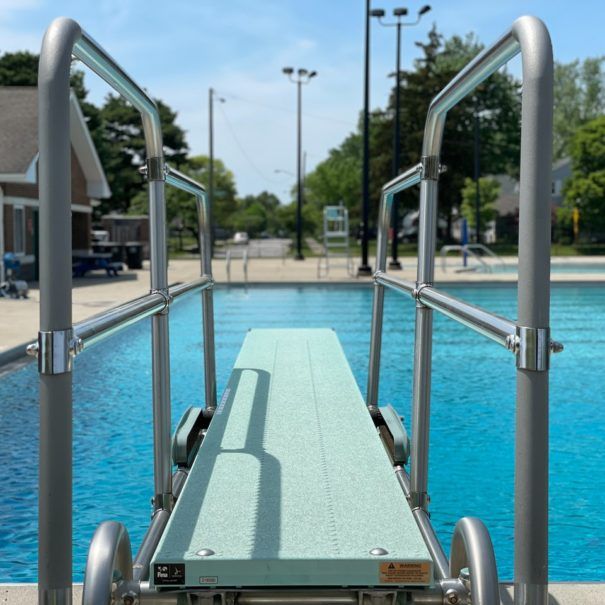
The most obvious difference between springboard and platform diving is in the structure of the board and the platform. A springboard is a flexible board that provides a certain amount of bounce or spring for the diver to work with. In contrast, a diving platform is a static platform. In other words, it’s a flat, stable surface that will not provide any give or bounce for the diver to work with.
Another visually clear difference is the height at which a springboard or platform is placed. Springboards are positioned 1 or 3 meters above the water’s surface. Diving platforms, by comparison, are positioned at 5, 7.5, and 10 meters above the surface of the water.
The Approach
Because of the different natures of a springboard and a diving platform, the approach that a diver takes to their dive will be different. In order to dive forward off of a springboard, a diver will typically take a few steps and a hurdle. To dive forward off of a diving platform, the typical approach is a run and a skip. While the approaches are different, they serve the same purpose: to create forward momentum that can be transformed into upward and rotational momentum.
The Upward Propulsion
Upward propulsion is also different between the two methods, thanks to the flexible nature of the board and the static nature of the platform. The flexibility of the board allows for the creation of energy and movement that the diver can leverage to aid in their upward propulsion. It’s a matter of precise timing. The diver must transfer energy to the board and then wait for the right moment to take it back so that they can get maximum efficiency.
While a diving board acts as a spring in springboard diving, the diver’s legs provide all the spring and upward propulsion in platform diving. A platform diver must bend their knees and push off using the muscles in their feet, ankles, legs, and hips to create the upward propulsion. The platform doesn’t provide any help beyond a stable surface to work off of.
Springboard and platform diving may look the same at first, but the structure of the board vs the platform, the approach the diver takes, and the way they propel themselves upward all have distinct differences. These differences are what make each type of diving unique to one another. If you’re interested in diving, take some time to learn about them so you’ll have a better idea of what each type takes.
Would you like to learn how to dive? That’s just one of the things you can learn in SwimJim’s advanced adult swimming lessons. Learn more here .
The post Springboard vs Platform Diving: What’s the Difference? appeared first on Swim Jim.