Effective Ways to Prevent Swimming Pool Accidents
Swimming pools are places to exercise, play, cool off, and spend time together. A few consistent safety habits can help everyone enjoy the water with greater confidence.
The most effective way to prevent swimming pool accidents is to use several layers of protection. These include active supervision, secure barriers, proper maintenance, safety equipment, swimming skills, and preparation for emergencies.
At SwimJim, water safety is an important part of learning to swim. Building strong swimming skills and safer habits can help children and adults become more confident around the water.
Practice Active Supervision
Active supervision is one of the most important steps you can take around any swimming pool. Children should receive close and constant attention whenever they are in or near the water.
The Centers for Disease Control and Prevention recommends designating a responsible adult to supervise children closely and constantly. That adult should avoid distracting activities, including using a phone or reading.
This remains important even when a lifeguard is present. At parties or group gatherings, families can designate a specific “water watcher” whose attention stays on the swimmers.
Young children and inexperienced swimmers may need even closer supervision. The American Red Cross recommends staying within arm’s reach of weak or inexperienced swimmers in the water.
Supervision also matters for capable swimmers. Encourage everyone to swim with a buddy rather than entering the pool alone.
Secure Pool Access
Pool barriers help prevent children from reaching the water when an adult does not expect them to be there. A secure pool area adds another layer of protection beyond supervision.
The CDC recommends a four-sided fence that completely separates a pool from the house and yard. The fence should be at least four feet high and have self-closing, self-latching gates.
Pool owners can add more safeguards based on their home's layout. Door and window alarms, pool alarms, locks, and properly maintained pool covers can help control access.
The U.S. Consumer Product Safety Commission's Pool Safely campaign also recommends barriers, alarms, and covers as important layers of protection.
After swimming, remove toys and other appealing items from the pool area. Make sure gates and access points are closed and secured every time.
Maintain a Safer Pool
Good maintenance supports both pool safety and healthy swimming. Pool owners should regularly check the water, equipment, drains, deck, and other parts of the swimming area.
Clean, clear water makes it easier to see swimmers and the bottom of the pool. Proper water chemistry also helps control germs that can make swimmers sick.
The CDC recommends maintaining a pH between 7.0 and 7.8. It also recommends at least 1 part per million of chlorine in pools without cyanuric acid.
Pool chemicals require careful handling as well. Read product instructions, use recommended protective equipment, and keep chemicals secured away from children and pets.
Regularly inspect ladders, handrails, covers, gates, alarms, and rescue equipment. Address damaged or poorly functioning equipment before opening the pool for swimming.
Keep Safety Equipment Ready
The right equipment adds another layer of protection around a swimming pool. Pool owners should keep essential rescue and safety items easy for adults to reach.
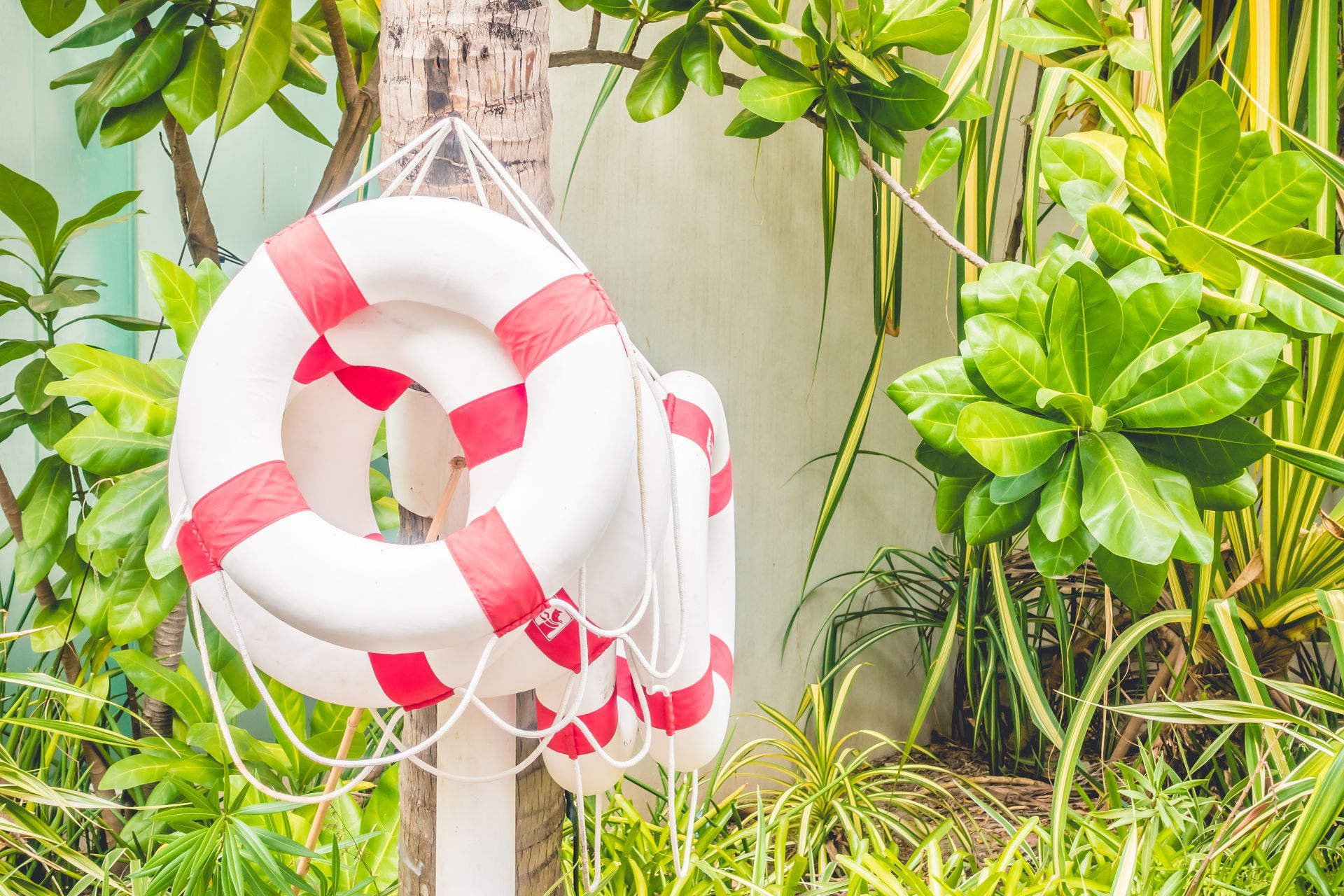
A reaching pole and flotation device can help someone assist a swimmer from outside the water. A well-stocked first aid kit and accessible phone can also help adults respond quickly.
Young children and inexperienced swimmers may need properly fitted, U.S. Coast Guard-approved life jackets around water. However, flotation devices never replace adult supervision.
Inflatable toys, swim rings, and water wings are designed for recreation. The American Red Cross advises families not to use them as substitutes for supervision or approved life jackets.
Pool owners should also make sure drains and other suction fittings meet applicable safety requirements. Swimmers should avoid playing near pool drains and other suction openings.
Follow Clear Pool Rules
Simple and consistent rules help swimmers know what safe behavior looks like. Everyone using the pool should understand the rules before getting into the water.
Walking instead of running on the pool deck can reduce slips and falls. Swimmers should also enter the water appropriately for its depth and only dive in areas specifically designated for diving.
Swimmers should ask permission before entering the pool, use the buddy system, and follow instructions from supervising adults or lifeguards.
Public pools may have additional requirements for swimmers. Pay attention to posted signs, depth markings, lifeguard instructions, and rules for diving or specific pool areas.
Home pool owners should also check applicable state and local requirements. Rules for fencing, gates, alarms, permits, and other safety measures can vary by location.
Build Strong Swimming Skills
Learning to swim is an important part of water safety for children and adults. Stronger skills can help swimmers become more capable and confident in the water.
The CDC reports that formal swimming lessons can reduce drowning risk. However, lessons do not replace close and constant supervision.
Water competency involves more than moving across a pool. Swimmers benefit from knowing how to enter the water, return to the surface, float, change position, swim a distance, and exit safely.
SwimJim's swimming lessons follow a structured learning path that combines swimming development with water safety. Early skills include breath control, floating, and emergency responses before swimmers progress to more advanced techniques.
Children can continue developing those abilities through kids and teen swimming lessons. Adults can benefit from learning and strengthening these skills, too.
The goal is not to make anyone feel “drown-proof.” No swimmer is beyond the need for sensible precautions. Instead, swimming education adds another valuable layer to a broader water safety plan.
Prepare for Emergencies
Preparation can make it easier to respond appropriately when someone needs help. Adults who supervise pools should know whom to call and where safety equipment is located.
Learning CPR and first aid is a valuable step for parents, caregivers, and pool owners. The CPSC's Pool Safely campaign encourages adults to learn CPR and keep their certification current.
Families should also understand how to help without creating another emergency. The American Red Cross teaches the principle of reaching or throwing a flotation aid to someone in trouble rather than entering the water for an untrained rescue.
Keep emergency numbers and the pool's address readily available. At a public pool, take a moment to identify the lifeguards and learn where emergency equipment is located.
Preparation does not have to make swimming feel frightening. It simply gives adults and swimmers a clearer plan if they ever need one.
Make Pool Safety a Habit
Preventing swimming pool accidents is not about relying on one device, rule, or swimming skill. It is about creating several layers of protection that work together every time someone enters the water.
Watch swimmers closely. Secure the pool when it is not in use. Maintain the water and equipment, keep safety tools nearby, follow pool rules, and build swimming skills over time.
Those habits can make water safety feel like a natural part of swimming rather than something that gets in the way of fun.
SwimJim helps children and adults develop swimming skills, confidence, and greater water safety awareness through supportive, progressive instruction.
Contact SwimJim to find the right swimming class for you or your family.