Best Swimming Relay Start Technique
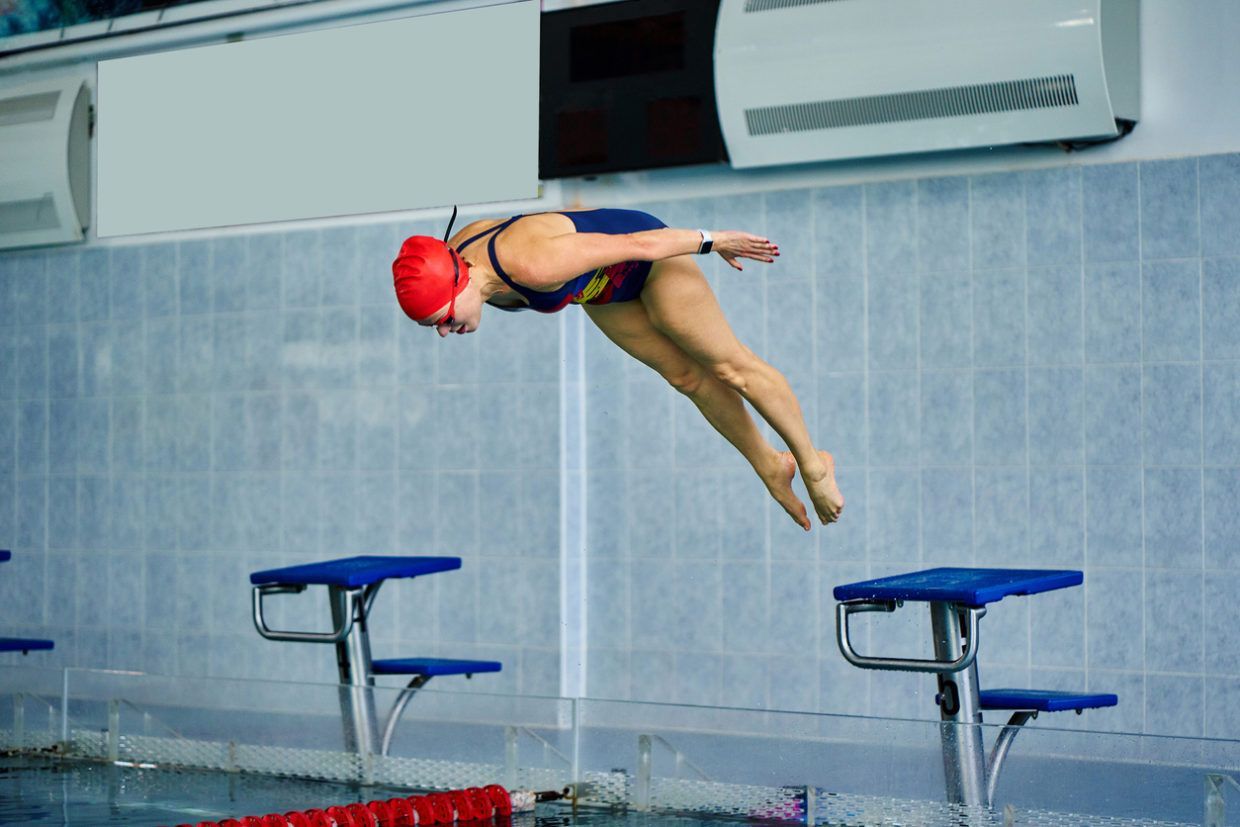
The relay race is the only event in swimming where team members get to work together. Each swimmer plays an important role in the results, making it a truly exciting event. The most important aspect of this event is each swimmer’s start. Marc Christian, a Division I swim coach, stated: “In races where hundredths of a second can mean the difference between first place or last, being able to sync your start with your teammate’s finish can make all the difference.”
Below are the best techniques to use in a swimming relay to ensure a smooth, quick, and powerful transition.
Position
For relay starts, most swimmers prefer a low body-ready position. Swimmers should be bent over, nearly touching their toes, with the gaze remaining down. It’s crucial that the arms and legs be positioned correctly:
- Arms: Start with the arms extended in front of the chest. Next, swing the arms back and forth to generate speed. Finally, the arms should remain forward until the swimmer pushes off from the block.
- Feet: The swimmer’s dominant food should remain in front with toes right over the edge and the non-dominant foot placed behind. During the windup, the back foot should move forward and a swimmer should push off when the back foot meets the front. It’s crucial that the swimmer jump out rather than up in order to get as much distance as possible.
Timing
Equally important as positioning is timing. Second, third, and fourth swimmers must time their jump as closely as possible with their teammate’s finish. Starting late means lost time. However, leaving before the swimmer touches the wall can be cause for disqualification.
The best start timing for a swimming relay is for the swimmer on the platform to begin their windup at the current swimmer’s last stroke. This ensures that the next swimmer jumps almost immediately after the wall touch.
Repetition
The best way to finesse this swimming relay start technique is to practice. In the weeks leading up to competition, relay teams should practice starts and exchanges as much as possible. Repeating these movements over and over again makes transitions faster and smoother. Additionally, it can help each swimmer learn the cadence and rhythm of each other’s strokes and adjust their dive and timing. More experienced swimmers can accurately predict from a few yards out how many strokes they need to hit the wall perfectly, at the exact right time for a smooth transition.
Perfecting swimming relay start techniques takes a lot of work. Heightened awareness of body positioning, polished timing, and frequent repetition at practice ensure a smooth transition every time. If you have questions about starting techniques for a swimming relay , SwimJim is happy to help! Our experienced team can help you learn more about your posture and timing to ensure a successful start. Request lessons today!
The post Best Swimming Relay Start Technique appeared first on Swim Jim.