Why we teach back floating…

We are first and foremost a water safety education center. It is our primary goal to make sure that every child is safer in the water, no matter what skill level the child. Every aspect of our curriculum is geared toward that reward.
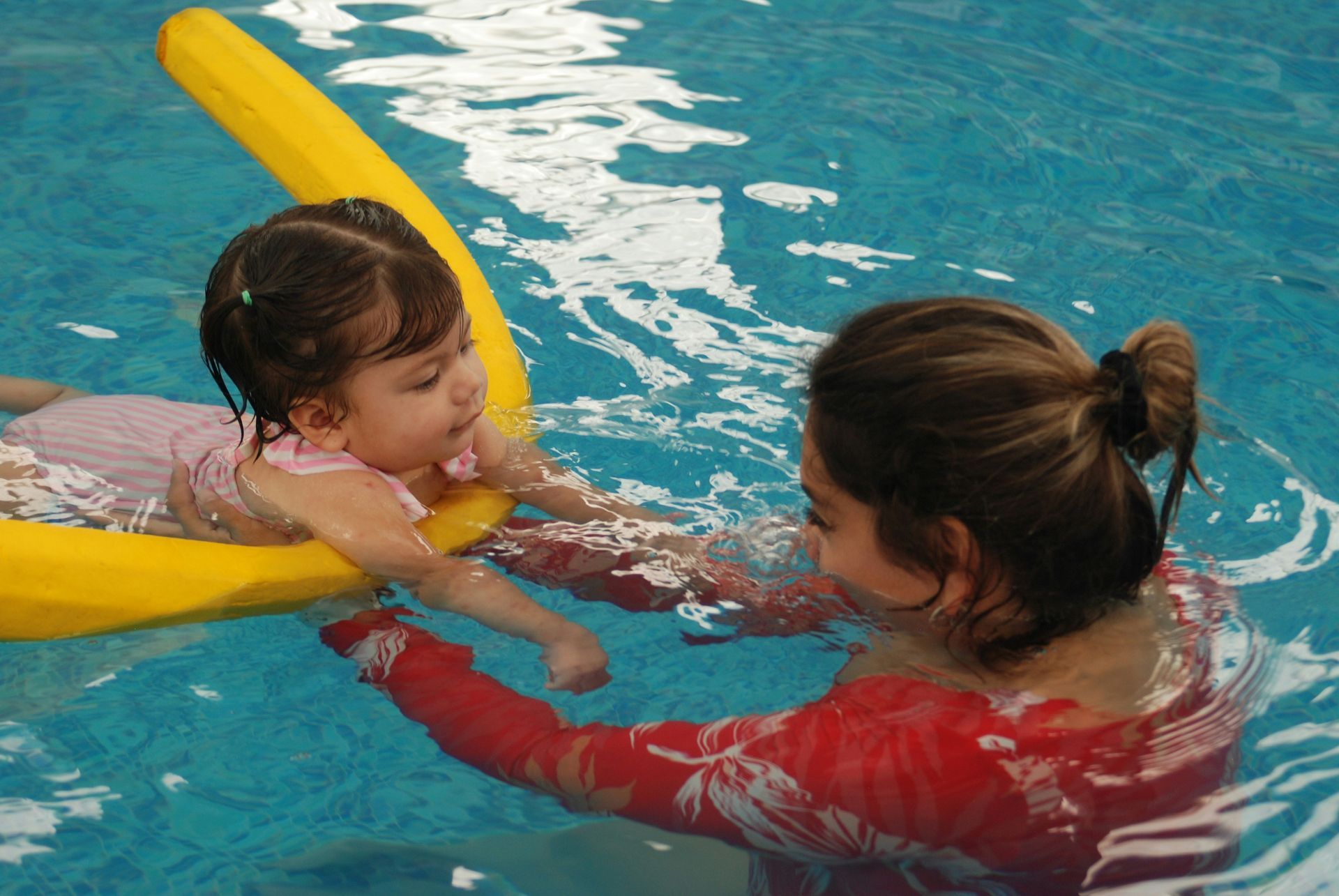
You may have noticed that we spend a lot of time floating with the children, and adults. We teach coming off the wall on our backs, rolling over to our backs to breathe, diving and resurfacing to a back float, getting rings off the floor to a back float and starting all skills on our back, i.e., backstroke before freestyle and elementary backstroke before breaststroke. Floating is the foundation of our program. It gives children and adults somewhere “ SAFER ” to go while exploring the water, simultaneously establishing balance by learning to access core muscles (the muscles that attach to our spine and ribs, helping us balance and stand upright) in an aquatic environment.
New swimmers often have a difficult time adjusting to floating. We are land based animals and are used to balancing in an upright position. This makes it difficult for some children, and adults, to get used to trying to balance on their backs. On land, we look to the horizon to find our bearings; this does not work in the water. It makes floating more difficult. Sitting up, looking for the horizon makes you sink in the water, hence the feeling of “falling” children often express about floating. It has been said that repetition is the mother of all learning. So we spend the majority of time early in our swimming careers learning to float, ensuring a safer child in the water.
A child that feels safer in the water will pick up new, more complicated skills easier than a child who is insecure about the water, and that child will be less likely to drown. Any time a child, or adult, feels insecure in the water; they should roll to their backs and float or grab the wall if they are near it. This will give you time to collect yourself, emotionally, mentally and physically, then get to a safer place like the wall, beach or somewhere you can stand. We still suggest that parents and caregivers take CPR and first aid classes as an added precaution, as well as follow the “SAFER 3” (Safer Kids, Safer Water, Safer Response) from the “Swim for Life” Foundation, of which Jim Spiers is a board member.
Swimming is a life skill that we believe everyone should master. It promotes a healthy, more confident, safer and enthusiastic water environment. It keeps our children active and promotes a healthier lifestyle. And most importantly, helps reduce the risk of drowning related accidents.
The post Why we teach back floating… appeared first on Swim Jim.