Physics Principles That Make Scuba Diving Work
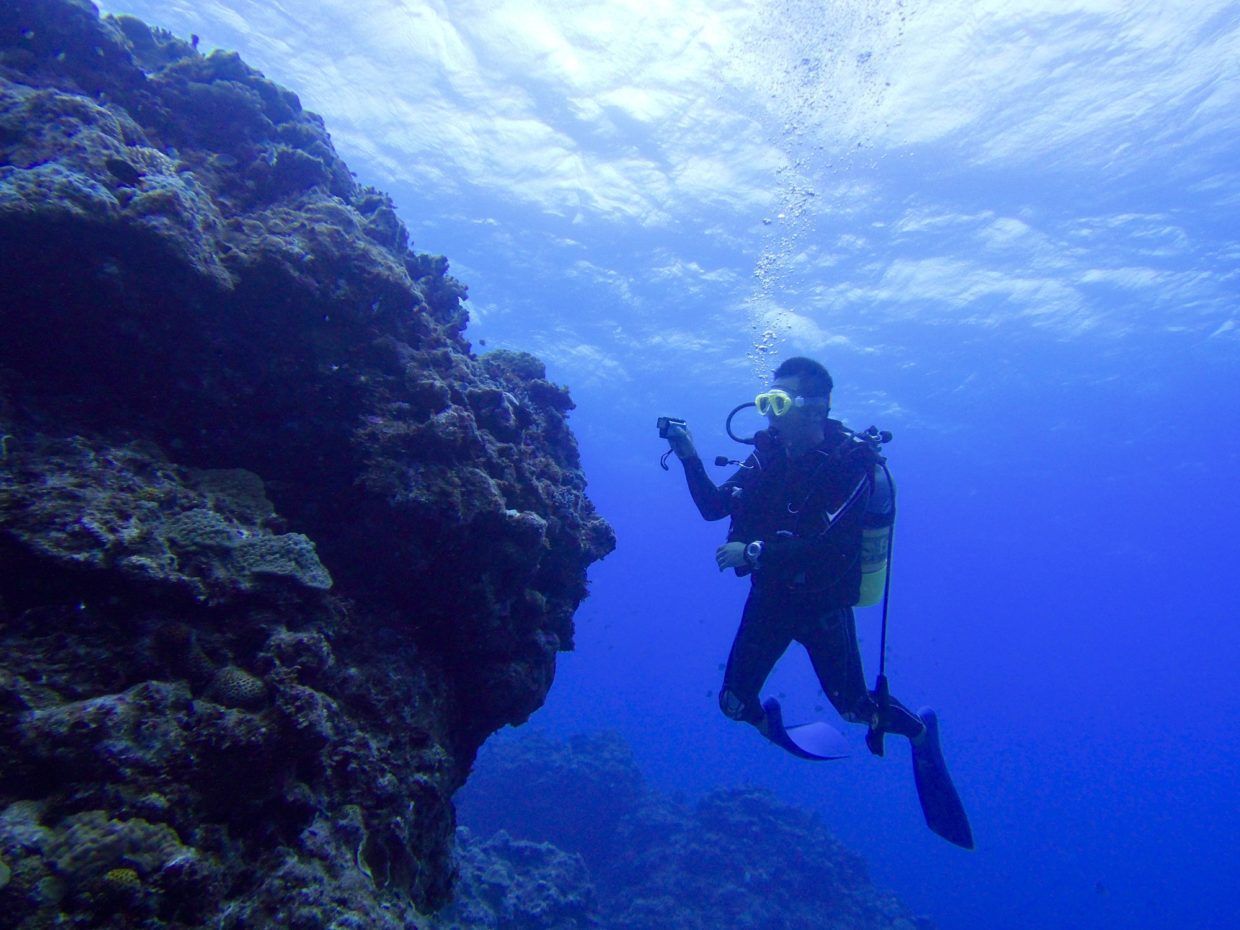
Scuba diving can be a ton of fun. It offers you an unparalleled chance to explore underwater worlds at your leisure without having to come up for air. Have you ever thought about how it all works though? As it turns out, there’s a whole lot of physics at work.
Buoyancy
Buoyancy is an upward force exerted by a liquid in opposition to the size and weight of an object. It’s like a counterforce to gravity, and is what makes it possible to float in the water. In scuba diving, buoyancy is influenced by a few factors. There’s the weight of your body and gear, the air in your buoyancy compensator device, any actual weights you’re carrying, the air in your lungs, the buoyancy of your suit, your depth, and your trim (your alignment in the water). All of those together allow you to control your position in the water with greater precision. The more control you have, the safe you and the ocean environment around you will be.
Propulsion
Newton’s third law of motion states that for every action there is an equal and opposite reaction. That’s the principle behind propulsion, which is what allows you to move in the water when you scuba dive. The fins scuba divers wear allow them to move more water to propel themselves more efficiently. Virtually all movement is done with the legs rather than the arms. Scuba diving primarily utilizes three types of kicks: flutter kicks, modified flutter kicks, and frog kicks. Knowing how to correctly perform each kick allows you to alternate between them. This is a great way to prevent your legs from cramping up, which could otherwise potentially put you in danger.
Pressure
Pressure, the amount of force exerted over an area, is an absolutely crucial principle for divers to understand. When you are submerged in the water, the water above you exerts pressure on you in addition to the atmospheric pressure you’re already used to. The deeper you go, the greater the pressure. That change in pressure is part of why you need to equalize the pressure in your ears periodically. One of the reasons why it’s so important for scuba divers to understand pressure is that as pressure increases with your depth, gases are also compressed. That’s why it’s so important for divers to take their time coming back up as the compression of gas makes it easier to absorb nitrogen which can cause decompression sickness if they ascend too quickly.
Physics has a huge part to play in how scuba diving works. Not only does it make it possible, but it also helps keep you safe. The more you understand about how scuba diving works and the principles behind it, the more you’ll be able to appreciate the unique opportunity that getting to explore oceanic terrain really is.
Have you ever wondered what it takes to go scuba diving? Read this to learn more: Do I Need to Be a Strong Swimmer to Go Scuba Diving?
The post Physics Principles That Make Scuba Diving Work appeared first on Swim Jim.